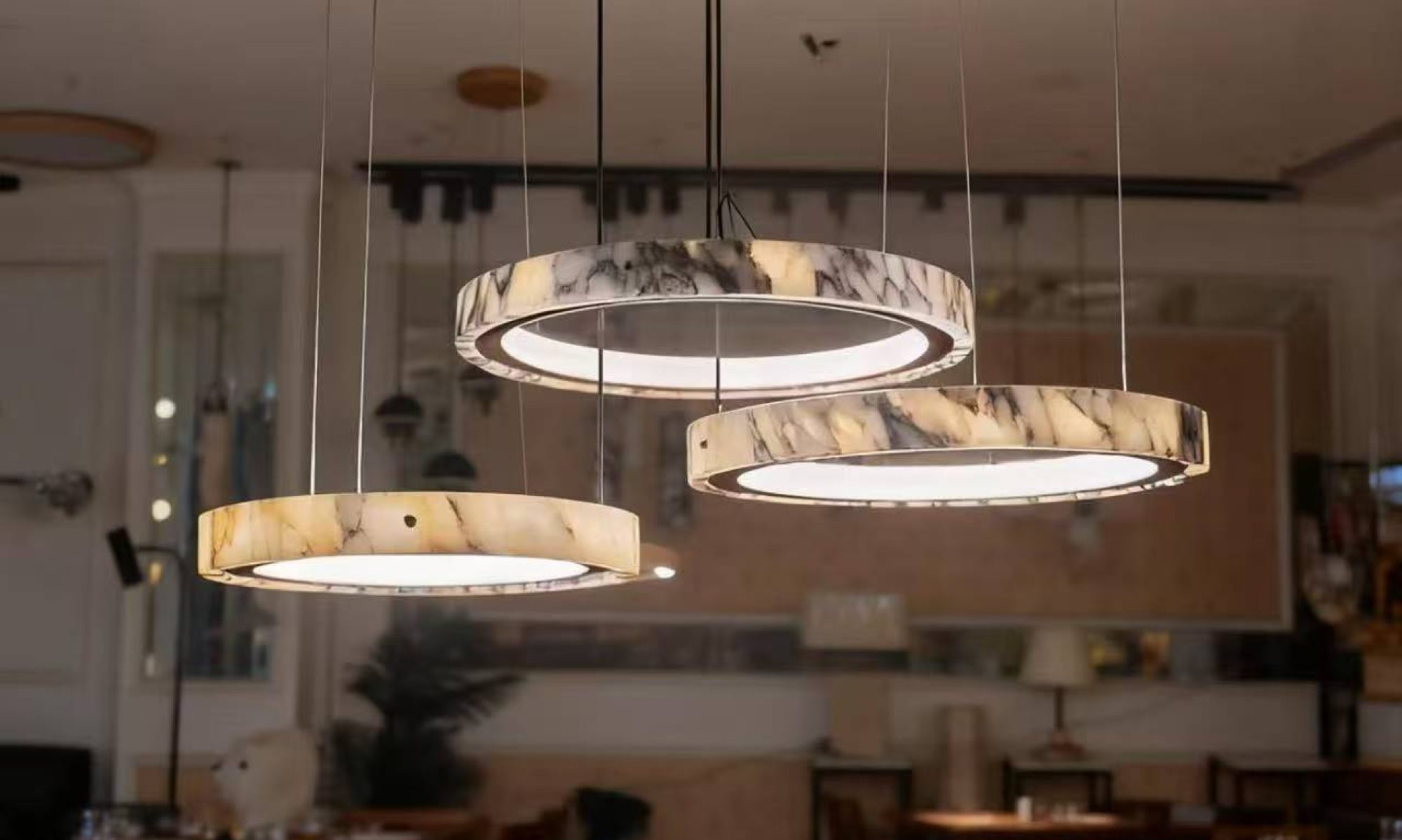
Stone material is the core of stone wall lamps, and its selection directly determines the product quality, cost, market positioning, and competitiveness of stone wall lamps. In 2026, with the continuous growth of the global stone wall lamp market, more and more foreign trade practitioners are facing a key dilemma: Should we choose natural stone or artificial stone for stone wall lamps? How to select stone materials that balance quality and cost? How to use stone material advantages to build differentiated products and get rid of homogeneous competition?
Different from the previous six guides (focusing on general operation, differentiation, compliance, beginner entry, high-end brand, and cross-border e-commerce), this article focuses on the core of stone wall lamps—stone material selection, focusing on three core dimensions: natural vs artificial stone comparison, cost control skills, and differentiated product building based on stone materials. It will combine the 2026 market trends, the characteristics of various stone materials, and foreign trade practical needs, providing in-depth and actionable guidance for all foreign trade stone wall lamp practitioners.
Whether you are a beginner who is confused about stone material selection, an experienced seller who wants to control costs and improve profit margins, or an enterprise that wants to build differentiated products, this article will help you clarify the selection direction, master cost control skills, and use stone material advantages to stand out in the global market, achieving stable development of the foreign trade stone wall lamp business.
Core Dilemma: Natural Stone vs Artificial Stone – Which Is More Suitable for Foreign Trade Stone Wall Lamps in 2026?
Natural stone and artificial stone have their own advantages and disadvantages, and their applicable market segments, cost, and competitiveness are very different. Many foreign trade practitioners blindly choose stone materials without understanding their characteristics, resulting in product quality problems, cost overruns, or supply-demand mismatch. To solve this dilemma, we first need to conduct a comprehensive comparison of natural stone and artificial stone, and then choose according to their own market positioning and cost budget.
1. Comprehensive Comparison: Natural Stone vs Artificial Stone
Below is a detailed comparison of natural stone and artificial stone from 8 core dimensions (material characteristics, quality, cost, supply stability, environmental protection, applicable scenarios, market positioning, and maintenance), helping you quickly grasp the differences between the two:
| Comparison Dimension | Natural Stone | Artificial Stone |
|---|---|---|
| Material Characteristics | Natural formation, unique texture and color, strong natural sense, each piece is unique | Artificially synthesized (resin, stone powder, etc.), uniform texture and color, customizable, consistent appearance |
| Quality & Durability | High hardness, strong wear resistance, good weather resistance, long service life (10-20 years) | Moderate hardness, good wear resistance, poor high-temperature resistance, service life (5-10 years) |
| Cost | High (raw material mining, processing costs are high), price fluctuates with market supply and demand | Low (raw material cost is low, processing is simple), price is stable, not affected by market fluctuations |
| Supply Stability | Poor (affected by mining policies, resource scarcity, and transportation), easy to have supply shortages | Good (artificial synthesis, stable production capacity), can meet large-scale order demand |
| Environmental Protection | Eco-friendly, natural and degradable, no harmful substances, in line with global green trends | Depends on raw materials; low-quality artificial stone may contain harmful substances (such as formaldehyde) |
| Applicable Scenarios | High-end residential, five-star hotels, luxury villas, outdoor public spaces (requires good weather resistance) | Mid-to-low-end residential, commercial spaces, indoor decoration, small-batch customized orders |
| Market Positioning | High-end, high premium, suitable for high-net-worth customers and high-end projects | Mid-to-low-end, cost-effective, suitable for mass consumers and small-batch orders |
| Maintenance | Requires regular maintenance (waterproof, anti-fouling), high maintenance cost | Easy to maintain, waterproof and anti-fouling, low maintenance cost |
2. Selection Guide: How to Choose Between Natural Stone and Artificial Stone?
There is no absolute “better” between natural stone and artificial stone, only “more suitable”. The key is to choose according to your own market positioning, cost budget, order demand, and target customer groups. Below are targeted selection suggestions for different types of foreign trade practitioners:
2.1 For High-End Market Sellers & Brand Enterprises
If your target market is the high-end segment (Western Europe, Middle East, high-net-worth individuals), and you focus on high quality, high premium, and brand building, natural stone is the best choice. Natural stone’s unique texture and natural sense can highlight the high-end attributes of products, meet the pursuit of high-end customers for quality and exclusivity, and help you establish a high-end brand image.
Recommended natural stone types: Italian Carrara marble, Greek marble, travertine, sandstone (high hardness, good texture, suitable for high-end stone wall lamps).
2.2 For Mid-to-Low-End Market Sellers & Novice Practitioners
If your target market is the mid-to-low-end segment (Southeast Asia, South America), and you focus on cost-effectiveness, large-scale sales, and low risk, artificial stone is more suitable. Artificial stone has the advantages of low cost, stable supply, and easy maintenance, which can help you control costs, improve market competitiveness, and adapt to the demand of mass consumers.
Recommended artificial stone types: Resin artificial stone, quartz stone (low cost, good durability, customizable, suitable for mid-to-low-end stone wall lamps).
2.3 For Cross-Border E-Commerce Sellers & Small-Batch Order Sellers
If you are a cross-border e-commerce seller (Amazon, AliExpress) or focus on small-batch, customized orders, it is recommended to adopt a mixed selection strategy: Use artificial stone for regular products (to control costs and ensure supply stability), and use natural stone for customized, high-value-added products (to meet the personalized needs of customers and improve profit margins).
2.4 For Outdoor Stone Wall Lamp Sellers
If you focus on outdoor stone wall lamps, it is recommended to choose natural stone with good weather resistance (such as sandstone, granite) or high-quality artificial stone (with waterproof, anti-ultraviolet, and low-temperature resistance functions). Outdoor products have high requirements for durability and weather resistance, and low-quality artificial stone is easy to fade and deform in harsh outdoor environments.
Step 1: Stone Material Selection Skills – Choose High-Quality, Cost-Effective Stone
No matter whether you choose natural stone or artificial stone, the key is to select high-quality, cost-effective stone materials to ensure product quality and control costs. Below are the key selection skills for natural stone and artificial stone, helping you avoid “pitfalls” and choose the most suitable stone materials.
1. Natural Stone Selection Skills
Natural stone has high quality and high cost, so it is very important to select high-quality natural stone to avoid quality problems. Focus on the following 5 key points:
1.1 Check the Stone Texture & Color
High-quality natural stone has uniform texture, no cracks, no holes, and consistent color. When selecting, observe the surface of the stone carefully: avoid stones with obvious cracks, holes, and color differences. For marble and travertine, pay attention to the texture clarity and luster; for sandstone and granite, pay attention to the hardness and density.
1.2 Test the Hardness & Density
The hardness and density of natural stone directly affect its durability and weather resistance. Use a hard object to scratch the surface of the stone: if there is no obvious scratch, the hardness is qualified; if the scratch is obvious, the stone is of poor quality. At the same time, weigh the stone of the same size: the heavier the stone, the higher the density, and the better the quality.
1.3 Check the Water Absorption Rate
The water absorption rate of natural stone is an important indicator of its waterproof performance. For outdoor stone wall lamps, the water absorption rate should be less than 0.5%. Test method: Drop a few drops of water on the surface of the stone. If the water is not absorbed quickly and does not penetrate into the stone, the water absorption rate is low; if the water is absorbed quickly, the water absorption rate is high, and the stone is not suitable for outdoor use.
1.4 Confirm the Origin & Quality Certification
The origin of natural stone directly affects its quality and price. For example, Italian marble, Greek marble, and other imported natural stones have better quality but higher prices; domestic natural stones (Fujian, Guangdong) have moderate quality and lower prices. When selecting, ask the supplier for the origin certificate and quality inspection report to ensure that the stone meets the relevant standards.
1.5 Negotiate with Suppliers to Control Costs
Natural stone prices are relatively high, and sellers can negotiate with suppliers to control costs: ① Choose large-scale stone suppliers to get a more favorable price; ② Purchase in bulk to get a volume discount; ③ Choose stone offcuts (suitable for small-sized stone wall lamps) to reduce material waste and cost.
2. Artificial Stone Selection Skills
Artificial stone has low cost and stable supply, but the quality varies greatly. When selecting, focus on the following 5 key points to avoid low-quality products:
2.1 Check the Raw Material Composition
High-quality artificial stone is made of high-purity resin, natural stone powder, and other environmentally friendly raw materials, without harmful substances (such as formaldehyde). When selecting, ask the supplier for the raw material inspection report, and avoid artificial stone made of low-quality resin (easy to fade, deform, and release harmful substances).
2.2 Observe the Surface & Edge
High-quality artificial stone has a smooth surface, no bubbles, no scratches, and neat edges. Avoid artificial stone with rough surface, obvious bubbles, and uneven edges (poor processing technology, easy to crack and deform).
2.3 Test the Wear Resistance & Waterproof Performance
Use a hard object to scratch the surface of the artificial stone: if there is no obvious scratch, the wear resistance is qualified; if the scratch is obvious, the quality is poor. At the same time, test the waterproof performance: drop water on the surface of the stone, and the water should not penetrate into the stone.
2.4 Check the Color Consistency
Artificial stone has the advantage of uniform color. When selecting, compare multiple pieces of artificial stone to ensure that the color is consistent, without obvious color differences. This is very important for large-scale orders to ensure the overall consistency of the product.
2.5 Choose Suppliers with Good Reputation
Choose artificial stone suppliers with good reputation, rich production experience, and perfect after-sales service. Avoid suppliers with extremely low prices (may use low-quality raw materials), and ask for product samples to test the quality before placing orders.
Step 2: Cost Control – Reduce Costs Without Reducing Quality
Cost control is the key to improving the profit margin of foreign trade stone wall lamps. For many practitioners, especially novices and small and medium-sized enterprises, how to reduce costs without reducing product quality is a core problem. Below are practical cost control skills, focusing on stone material costs, processing costs, and packaging costs, helping you maximize profit margins.
1. Stone Material Cost Control (The Most Important Link)
Stone material costs account for 40%-60% of the total product cost, so controlling stone material costs is the key to overall cost control. Here are 4 practical skills:
1.1 Choose the Right Stone Material According to Market Positioning
Do not blindly pursue high-quality natural stone. Choose stone materials according to your own market positioning: for mid-to-low-end markets, choose cost-effective artificial stone or domestic natural stone; for high-end markets, choose high-quality natural stone. Avoid over-selecting stone materials (such as using high-end marble for mid-to-low-end products), which will increase costs and reduce profit margins.
1.2 Optimize Stone Cutting & Reduce Waste
Stone cutting waste is an important factor leading to increased costs. Cooperate with suppliers with professional cutting technology to optimize the cutting plan: according to the size and shape of the stone wall lamp, reasonably design the cutting size, reduce the waste of stone materials. For example, for small-sized stone wall lamps, use stone offcuts to reduce material waste.
1.3 Establish Long-Term Cooperative Relations with Suppliers
Establish long-term cooperative relations with stone suppliers to get more favorable prices and preferential policies. Long-term cooperation can not only reduce the purchase price but also ensure the stability of stone supply and avoid cost increases caused by supply shortages and price fluctuations.
1.4 Purchase in Bulk at the Right Time
For natural stone with stable demand, purchase in bulk at the right time (such as when the market price is low) to lock in the price and reduce the impact of price fluctuations. For artificial stone, purchase in bulk to get a volume discount and reduce the unit cost.
2. Processing Cost Control
Processing costs (cutting, polishing, drilling, lamp installation) account for 20%-30% of the total product cost. Optimize the processing process to reduce processing costs:
① Choose suppliers with advanced processing equipment and mature technology to improve processing efficiency and reduce processing time (reduce labor costs);
② Simplify the processing process for mid-to-low-end products: avoid overly complex polishing and carving processes, reduce processing costs;
③ Integrate processing links: choose suppliers that can provide one-stop processing services (cutting, polishing, lamp installation) to reduce the cost of intermediate links.
3. Packaging Cost Control
Packaging costs are often ignored by sellers, but they can also be optimized to reduce costs. Focus on the following points:
① Choose cost-effective packaging materials: use foam, bubble wrap, and cartons with moderate hardness (not too thick or too thin) to ensure product safety while reducing packaging costs;
② Optimize packaging design: design the packaging size according to the product size, reduce the packaging volume, and reduce logistics costs (logistics costs are related to packaging volume and weight);
③ Reuse packaging materials: for sample orders and small-batch orders, reuse packaging materials (such as cartons) to reduce waste and costs.
Step 3: Differentiated Product Building – Use Stone Material Advantages to Stand Out
In the fierce foreign trade stone wall lamp market, differentiation is the key to standing out. Stone material is the core advantage of stone wall lamps, and we can build differentiated products by giving full play to the characteristics of different stone materials, avoiding homogeneous competition, and improving product competitiveness. Below are 4 practical differentiation strategies based on stone materials.